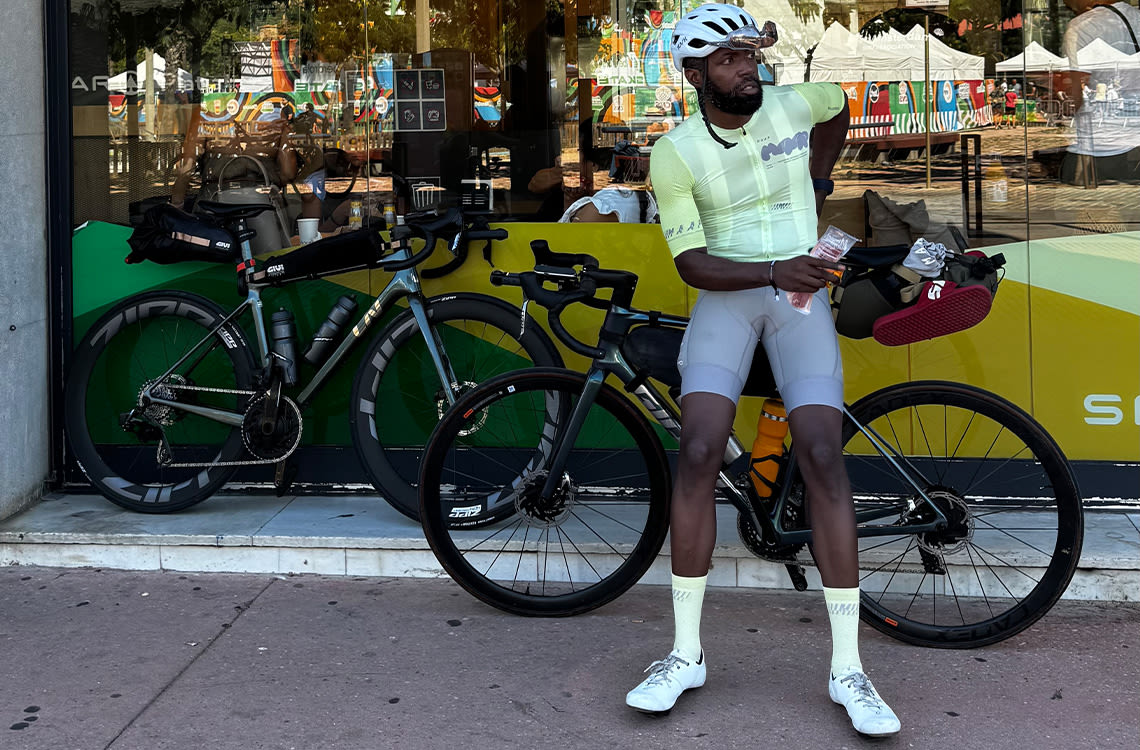
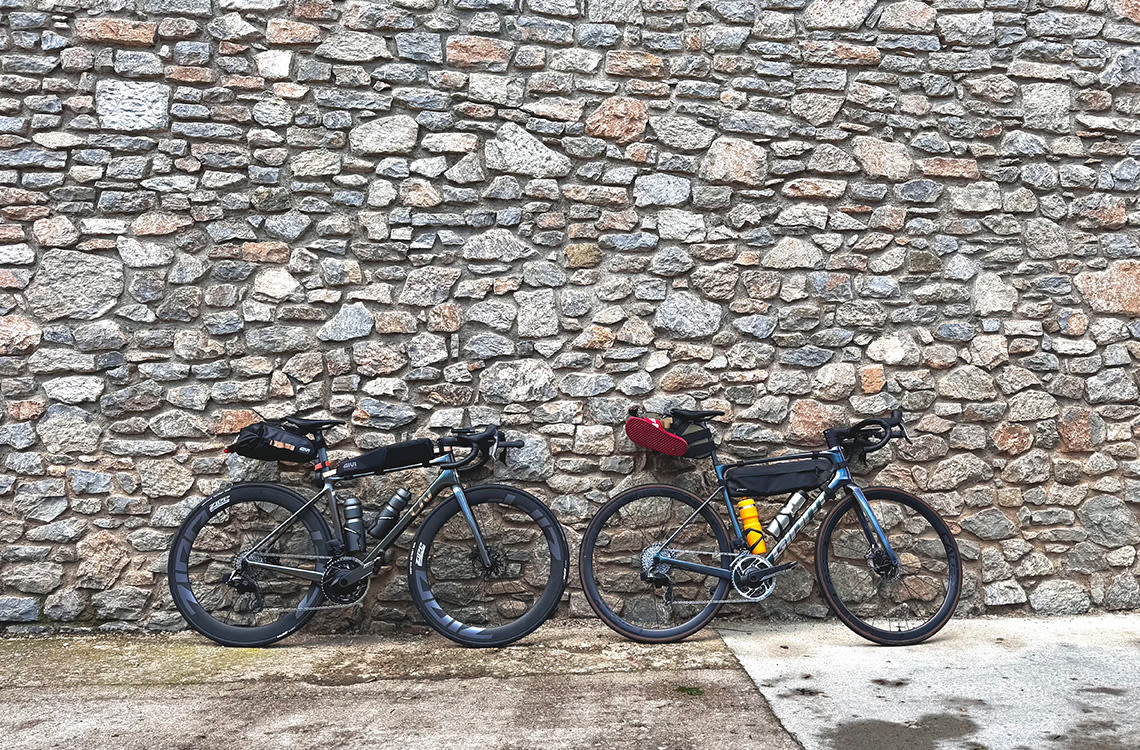
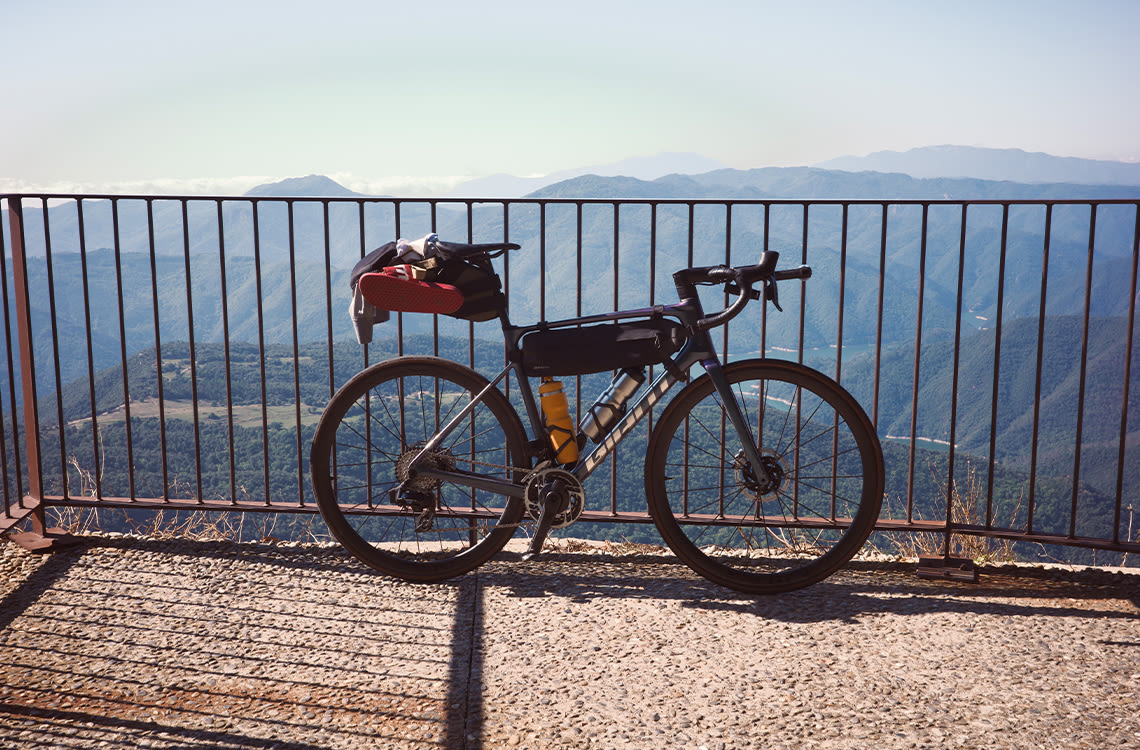
With that goal in mind, we set the agenda around our planned stops. With five mandatory checkpoints we had a good idea where we’d want to sleep and resupply for nutrition. To be fair, my experience the previous year was that I preferred to not stop much, but Ayesha made sure to veto that for this longer attempt. I guess climbing Coll d’Ares first thing in the morning with only some bread and juice for breakfast and no food stops until midday makes my preferences ill-advised. So this year we planned to have supply stops every 50km or so. Running out of fuel would not be an issue.
While the extra climbing would be challenging, I felt confident in my trusted bike setup with my Defy Advanced SL. I had used it to ride from Bilbao to Barcelona a few months prior and felt good going in.
Unfortunately, that confidence left the chat about 10 minutes before our 6 am start. My bike was leaning against the car, and when Ayesha slammed the door shut, the Defy fell to the ground, resulting in a bent derailleur hanger. With just minutes to get to the start line, I had no choice but to press on without being able to use any gears higher than the sixth cog on my 10-36 cassette.
Such is how long-distance events go—anything can and usually will happen. Fortunately, the Defy comes equipped with a 46/33T crank, so it wasn’t completely unbearable. By the time we had carefully bent the hanger back into shape, we were well into seven hours of saddle time.
Challenges like this can make for a bad time, but we’re both headstrong and we knew that if we kept cool, we could work it out. A large part of any long-distance ride is controlling how you deal with arising issues, especially when riding with others. Despite tiring out my legs on the climbs more than I’d anticipated, we finished our first day in the dark but with full use of my cassette. Day one would be our longest at 294km and the most climbing at 16,781 feet (5,115m), so everything moving forward should be smooth sailing. Right?