Whether you want to make everyday journeys easier, ride further or explore new terrain, an e-bike can provide the extra support you need while still giving you a natural cycling experience.
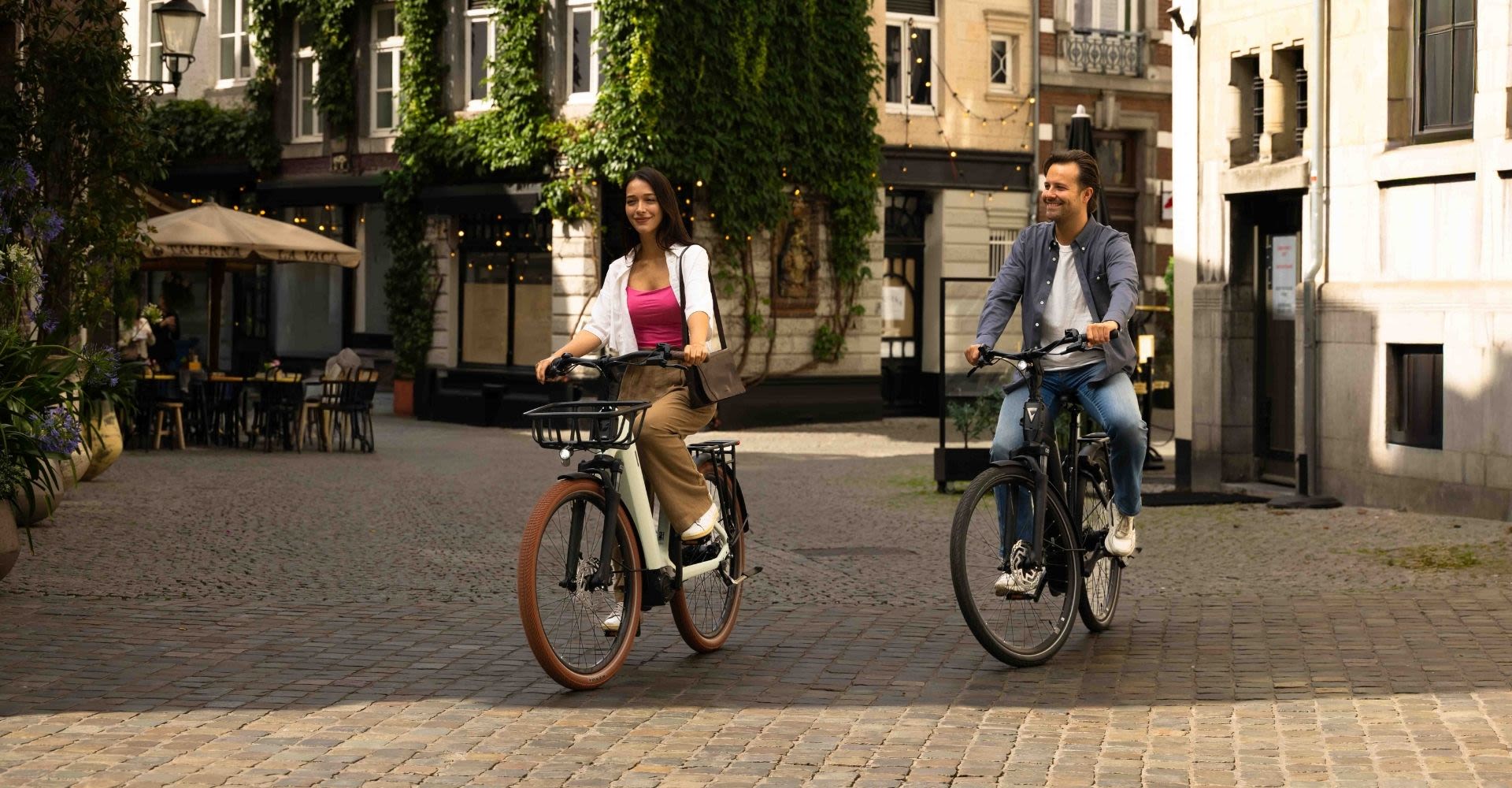
A BEGINNER’S GUIDE TO E-BIKES
New to e-bikes? This guide explains how they work, the different types available and what to consider when choosing your first one.

WHAT IS AN E-BIKE?
An e-bike is a bicycle with an electric motor and rechargeable battery that provide assistance while you pedal.
The motor does not replace your effort. Instead, it adds support to each pedal stroke, helping you manage hills, travel further and ride with less strain.
You can choose between different assistance levels depending on how much support you want. Higher levels provide more help, while lower levels conserve battery and create a riding experience closer to a traditional bike.
On UK road-legal e-bikes, assistance is only provided while you are pedalling and gradually stops when you reach the legal assisted-speed limit.

HOW DOES AN E-BIKE WORK?
The main parts of an e-bike work together to provide smooth, controlled assistance:
Giant brings these parts together through the E+ System to deliver support that feels smooth, responsive and natural.
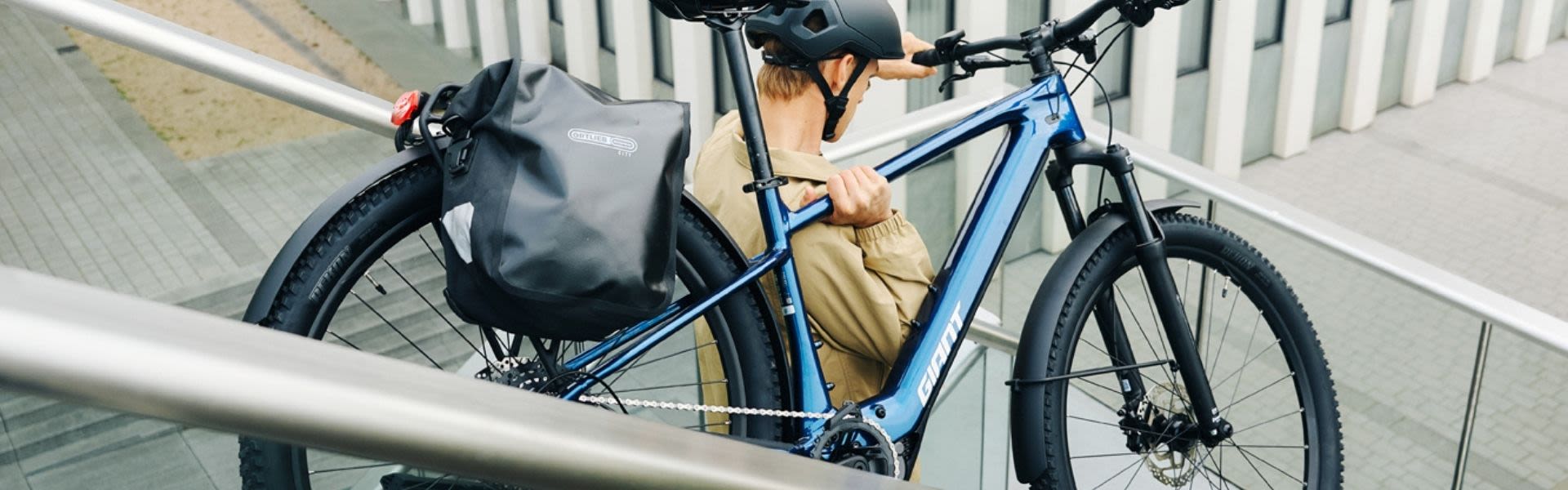
UNDERSTANDING E-BIKE TERMS
A few common terms can help you compare different e-bikes.
NM – MOTOR TORQUE
Newton metres, or Nm, indicate the turning force provided by the motor. Higher torque can provide more support when climbing, carrying luggage or riding over challenging terrain. However, the most suitable motor depends on how and where you plan to ride.
WH – BATTERY CAPACITY
Watt-hours, or Wh, indicate how much energy a battery can store. A larger capacity can support longer journeys, but the distance available will also depend on the bike, assistance level, terrain and riding conditions.
ASSISTANCE LEVEL
The assistance level controls how much support the motor provides. Higher settings can make hills and acceleration easier but use more battery. Lower settings conserve energy and provide a more natural feel.
RANGE
Range is the estimated distance an e-bike can travel on one charge. It is an estimate rather than a guaranteed figure because every journey and rider is different.
RANGE EXTENDER
A range extender is an additional compatible battery that increases the total energy available for longer journeys. Compatibility varies by model.
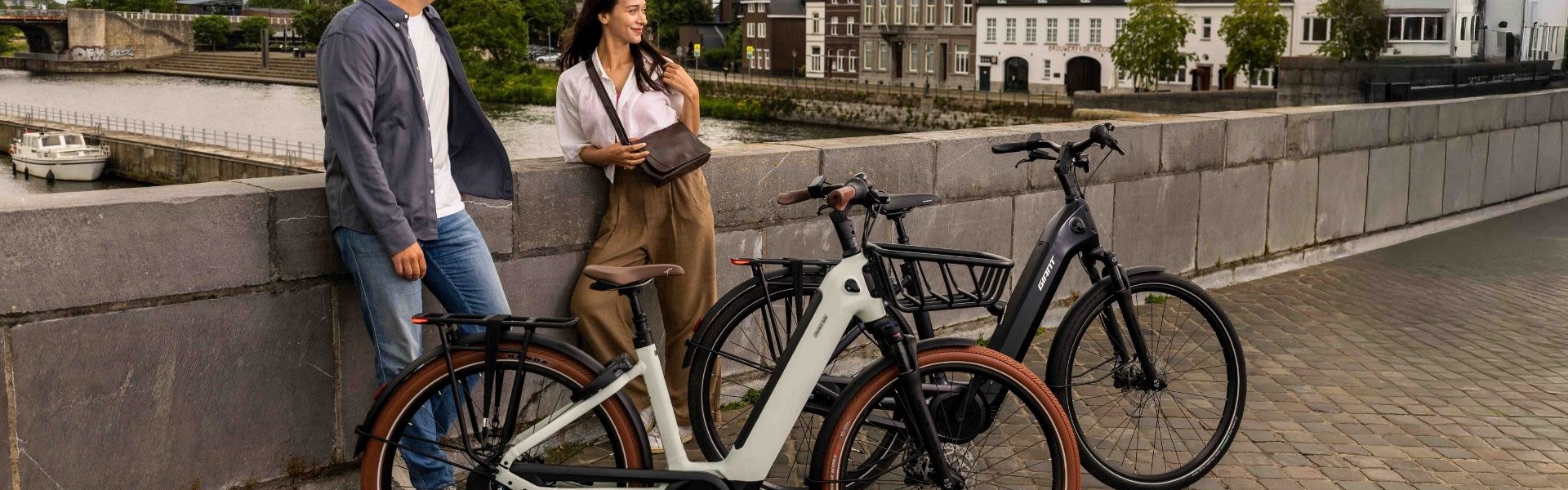
E-BIKE RANGE AND CHARGING
The distance available from one charge depends on several factors, including:
- Battery capacity
- Assistance level
- Hills and terrain
- Rider weight and luggage
- Weather and temperature
- Tyre pressure and bike maintenance
- Riding speed and pedalling input
Using a lower assistance level, maintaining the correct tyre pressure and keeping the bike well maintained can help improve efficiency.
Charging times vary depending on the battery and charger. Always use the correct compatible charger supplied or approved for your e-bike, and follow the instructions in the owner’s manual.
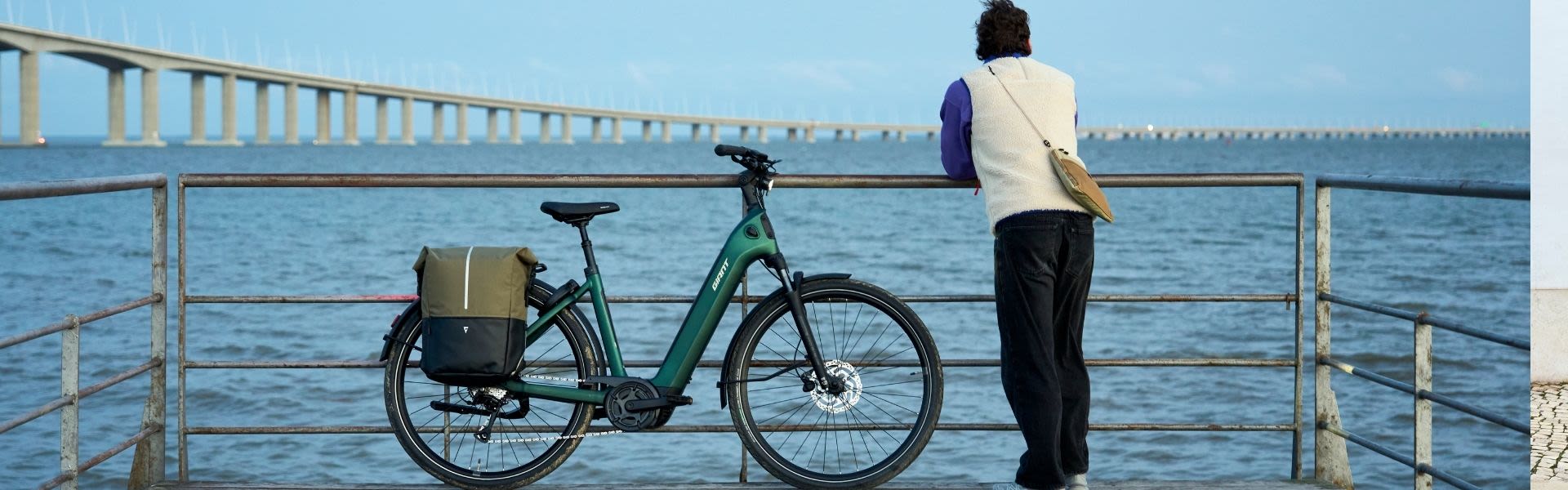
WHAT SHOULD YOU CONSIDER BEFORE BUYING?
Think about how you expect to use your e-bike.
YOUR RIDING
Consider whether you will mainly use it for commuting, shopping, leisure rides, road cycling or off-road trails.
TERRAIN
Think about whether your journeys will include flat roads, steep hills, gravel, mixed surfaces or technical trails.
DISTANCE
Consider the length of your usual journeys and how often you will be able to charge the battery.
COMFORT
Your preferred riding position, frame style, suspension and contact points can all affect comfort.
PRACTICAL FEATURES
You may want features such as lights, mudguards, a rack, a kickstand or integrated security.
STORAGE AND CHARGING
Think about where you will store the bike, whether the battery can be removed and where you will charge it.
A Giant retailer can help you compare models, choose the correct size and find an e-bike that suits your riding.

ARE E-BIKES ROAD LEGAL IN THE UK?
A road-legal e-bike is known as an electrically assisted pedal cycle, or EAPC.
To meet the main EAPC requirements:
- It must have pedals that can propel the bike
- The motor’s continuous rated power must not exceed 250 watts
- Motor assistance must not propel the bike when it is travelling above 15.5mph
- The rider must be aged 14 or over
You do not need a driving licence to ride an EAPC, and it does not need to be registered, taxed or insured. It can be used on cycle paths and anywhere else pedal cycles are permitted, but not on pavements.
An electric bike that does not meet these requirements may be treated as a moped or motorcycle, with different legal requirements.
RIDE WITH CONFIDENCE
Giant is an E-Bike Positive verified brand, providing added confidence that our e-bikes meet the scheme’s safety, legal and industry requirements.
For safe charging and reliable performance:
- Use a compatible Giant-approved battery and charger
- Follow the supplied charging and storage instructions
- Do not modify the motor or assistance-speed settings
- Have the bike inspected and serviced by an authorised retailer
- Register your bike to access the relevant warranty and support
FIND THE RIGHT GIANT E-BIKE
Explore the different types of Giant e-bike and find the right option for the way you ride.